What Is CSA Certification, and Why Does It Matter for Your Parking Lift?
If you've spent any time researching parking lifts or car elevators, you've likely come across the term “CSA certified.” It's mentioned on spec sheets, brochures, and product pages — including our own. But what does CSA certification actually mean, and why should it factor into your decision for parking lifts?
Whether you're a homeowner evaluating a purchase or an architect coordinating a build, understanding CSA certification helps you make a more informed decision — and avoid costly surprises later in your project.
What Is CSA Certification?
CSA stands for the Canadian Standards Association, an organization that has been developing safety standards for products sold and used in Canada since 1919. Today, CSA Group is responsible for both developing these standards and certifying that products meet them.
When a product carries CSA certification, it means that it has been independently tested by an accredited body and verified to meet specific Canadian safety requirements — covering things like electrical safety, structural integrity, and overall performance, depending on the product category.
For electrical equipment specifically, CSA certification confirms compliance with the Canadian Electrical Code — the set of rules that governs the safe installation and operation of electrical systems across the country.
Other Agencies Can Certify to the CSA Standard Too

CSA Group develops the standards, but it isn't the only organization authorized to test and certify products against them. Other accredited certification bodies — including UL (Underwriters Laboratories) and Intertek (ETL) — can also certify equipment to CSA standards, and that certification holds exactly the same legal and practical value as one issued directly by CSA Group.
This matters because you may see a “cULus,” “ETL,” or similar mark instead of a CSA logo on a product, and it doesn't mean the equipment is uncertified. What matters is not the name of the certifying body, but whether the certification specifically covers the Canadian standard — not just the equivalent U.S. one.
This is the detail worth checking carefully: many of these certification marks cover both the U.S. and Canada, but some cover only the U.S. Look for a “C” alongside the mark (for example, “cULus” or “ETLc”) — this indicates the certification specifically includes Canadian standards, not just American ones. A mark without that “C” may only confirm compliance with U.S. requirements, which isn't sufficient for legal use in Canada.
Why CSA Certification Matters?
It's Often a Legal Requirement
In every Canadian province and territory, electrical equipment connected to a power source is required by law to meet CSA safety standards, or an equivalent recognized certification. This isn't a marketing checkbox — it's a baseline requirement for legally operating electrical machinery in Canada.
For a parking lift, which relies on electrical components to operate safely, this matters significantly. Equipment without proper certification may not be approved by inspectors, and using uncertified electrical equipment introduces real risk — from electrical faults to safety failures.
It's Paramount for Safe Electrical Connection
CSA certification isn't just a formality before a lift is powered on — it's the foundation that allows a licensed electrician to safely connect the equipment to your electrical system in the first place. Before performing any work, a certified electrician will confirm that the equipment carries valid CSA certification. This step matters because the electrician is the one taking professional responsibility for the connection — they need assurance that what they're wiring into your home or facility has already been independently tested and meets Canadian electrical safety requirements.
Without that certification, an electrician may be unable, or unwilling, to connect the equipment at all — which can stall a project regardless of how good the lift itself might be.
It Reflects Independent, Third-Party Testing
CSA certification isn't self-declared. Products undergo testing by an accredited body, an initial factory inspection, and ongoing periodic audits to confirm continued compliance. If a product fails to meet the standard during a follow-up audit, it can lose its certification.
This means a CSA mark isn't just a one-time check — it reflects an ongoing commitment to maintaining a consistent safety standard throughout production.
It Signals Manufacturing Consistency
Because CSA certification requires periodic factory audits, it provides a level of assurance that goes beyond the individual unit you receive. It indicates that the manufacturer has processes in place to consistently produce equipment that meets the same safety standard, batch after batch — not just whatever sample was originally submitted for testing.
The Hidden Risk of Cheap, Non-Certified Equipment
A quick search online will turn up parking lifts and car stackers at prices that seem hard to beat. In many cases, these are imported units that have never been tested against Canadian standards and carry no CSA certification at all. The lower price tag can be tempting, but it's worth understanding exactly what you'd be taking on.
• A genuine safety hazard: Without independent testing, there's no verified assurance that the electrical components have been built or insulated to a safe standard. Equipment connected to 220V power that hasn't been properly tested carries a real risk of electrical faults, shorts, or fire.
• An electrician may simply refuse the job: As outlined above, a licensed electrician is responsible for confirming that any equipment they connect carries valid certification. Many will decline to connect non-CSA equipment outright — leaving you with a lift you can't legally or safely power on.
• Insurance complications: In the event of a fire or significant property damage, insurers may investigate whether the equipment involved met applicable Canadian safety standards. Non-certified equipment connected to high-voltage power can become a focal point in that investigation, potentially affecting how a claim is handled.
The upfront savings on uncertified equipment can be quickly outweighed by the cost, delay, and risk involved if something goes wrong — or if it simply can't be installed at all.
How This Applies to Nelca Systems Products
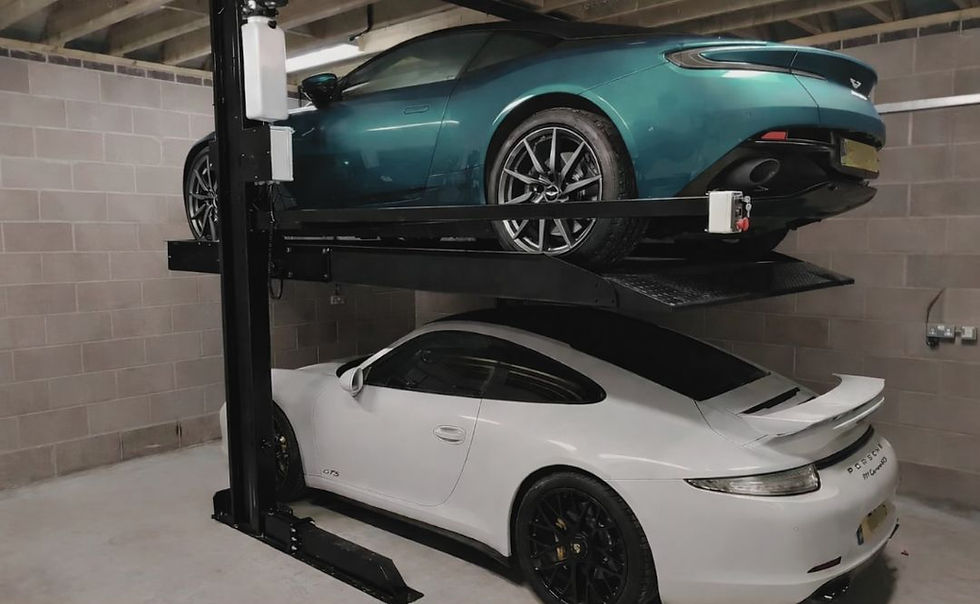
Every parking lift and car elevator system in the Nelca Systems range is CSA certified for its electrical components. This is a deliberate standard we hold across our entire product line — whether it's the NS26, the OMER BiPark, TriPark, or The Vault.
In practice, this means:
• The electrical systems powering your lift have been independently tested and verified to meet Canadian safety requirements.
• You're working with equipment that's manufactured under an ongoing quality assurance process, not just a one-time certification.
• Architects and contractors working with us can specify our products with confidence that the electrical components meet the standard expected on Canadian projects.
This is one of the reasons we work closely with manufacturers like OMER, who build CSA compliance into their product design from the outset rather than treating it as an afterthought.
What This Means for Your Project
If you're a homeowner, CSA certification gives you confidence that the lift you're investing in meets a recognized Canadian safety standard for its electrical components — not just a generic international certification that may or may not align with Canadian requirements.
If you're an architect or contractor, specifying CSA-certified equipment from the start helps keep your project moving smoothly. It signals to inspectors, electricians, and project stakeholders that the equipment meets the expected baseline for electrical safety in a Canadian build.
Either way, it's worth asking the question directly when evaluating any parking lift or car elevator: is the electrical equipment CSA certified? It's a simple question with a meaningful answer.
Have Questions About Our Certified Products?
Nelca Systems supplies CSA-certified parking lifts and car elevators across Canada, and we're happy to walk you through the specifics for any product in our range. Contact us to learn more, or to get started on your project.

Comments