2-Post Parking Lift Installation Guide: What Homeowners Need to Know

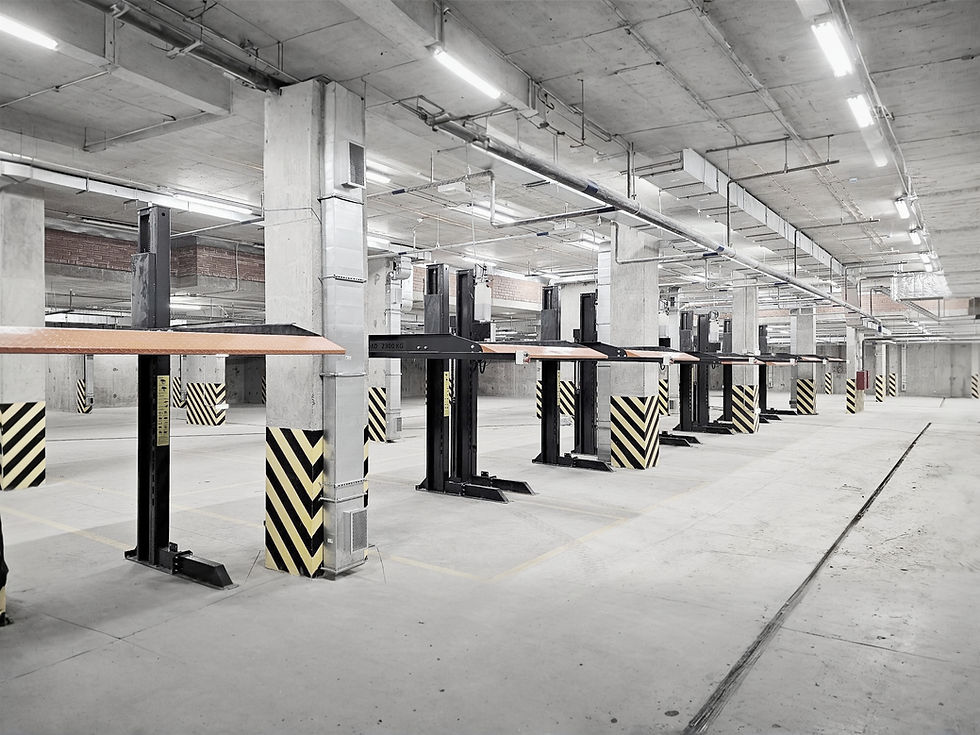
A 2-post parking lift is one of the most practical ways to double your parking capacity without major construction.
Whether you’re trying to fit a second car into a tight garage or protect a prized vehicle from the elements, a well-installed parking lift can transform how you use your space.
At Nelca Systems, we supply residential and commercial parking lift across Canada. Here’s a complete guide to help you understand the process before you get started.
Step 1: Is Your Garage Ready?
Before anything else, your garage needs to meet a few key requirements for a 2-post lift:
• Ceiling height: A minimum of 11–12 feet is typically required, depending on the lift model and vehicle height. Measure with the garage door closed and open.
• Floor strength: Your concrete slab must be thick enough to support the anchor bolts — typically 4 inches minimum, though 6 inches is preferred.
• Floor levelness: An uneven floor can affect lift alignment and long-term safety.
• Electrical access: Most 2-post lifts require a 220V single-phase power outlet nearby.
If you’re unsure whether your garage qualifies, Nelca Systems offers a complimentary site assessment to evaluate your space before any commitment.
Step 2: Permits and Local Codes in Canada
Permit requirements vary by municipality. In many Canadian cities, a building permit is required for any structural modification or mechanical installation inside a garage. Some municipalities classify a parking lift as a mechanical system, while others treat it as a structural change — each with different permit paths.
Nelca Systems assists clients in navigating local permit requirements. We prepare the technical documentation and drawings needed for permit applications in Ontario, Quebec, British Columbia, and other provinces.
Step 3: Choosing the Right 2-Post Lift
Not all 2-post parking lifts are the same. Key considerations include:
• Weight capacity: Lifts typically range from 2,500 kg to 3,000 kg. Consider the weight of all vehicles you plan to store.
• Rise height: Ensure the lift can raise the lower vehicle high enough to comfortably drive or access the vehicle underneath.
• Drive-through vs. fixed post: Some models allow both cars to exit from either end; others have a fixed layout.
• Safety certifications: Always ensure your lift meets Canadian safety standards (ETLC/CSA or equivalent).
Step 4: The Installation Process
A typical 2-post parking lift installation takes 1–2 days for a residential garage, depending on site conditions. Here’s what the process looks like:
Site inspection and final measurements
Assembly of the structure (posts, decking of the platform...)
Hydraulic or electromechanical system assembly
Electrical connection and testing
Safety system verification (locks, sensors, overload protection)
Concrete anchoring of lift posts
Client walkthrough and handover
Step 5: After Installation — Maintenance and Warranty
A properly maintained 2-post lift should last 20+ years. Nelca Systems recommends annual inspections and provides warranty coverage on structure, power rack and parts. Key maintenance tasks include lubricating moving parts, inspecting safety locks, and checking hydraulic fluid levels.
Ready to Move Forward?
If you’re considering a 2-post parking lift for your home or commercial property, Nelca Systems is here to help at every step — from the initial quote to the final walkthrough. Contact us to book your free site assessment today.
Comments